Soil Testing Labs in Hyderabad: What Happens to Your Sample and What You Get Back
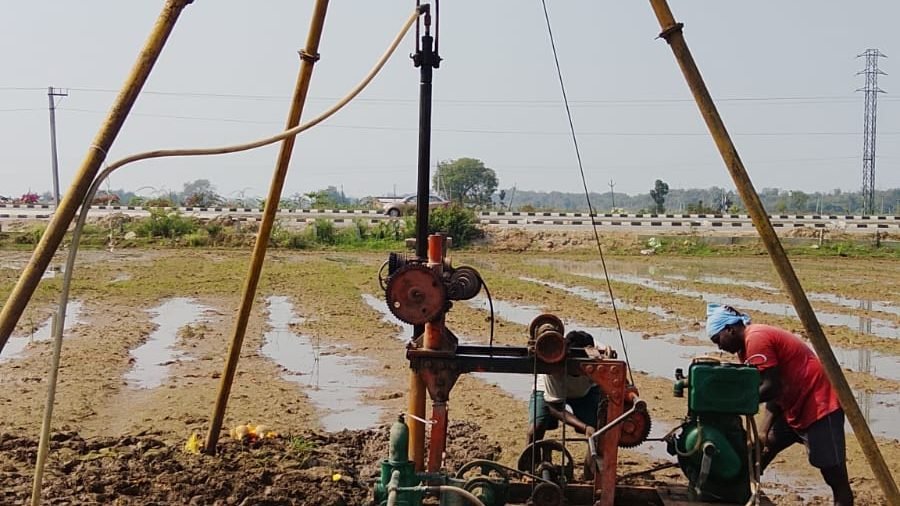
Most people who search for a soil testing lab have been told by an engineer or a bank to “get the soil tested.” Few know what that actually involves. This post explains it in plain terms, so you know what you are paying for and can tell a good lab from a quick one.
Field testing and lab testing are two halves of one job
Soil testing for construction happens in two places.
At your site, the team drills boreholes, notes each soil layer as it comes up, checks where the water table is, and collects samples. Some tests, like the plate load test or the dynamic cone penetration test, are done right there in the ground.
The samples then go to the lab. That is where the soil is measured properly: what it is made of, how much water it holds, how it behaves when it gets wet, and how much load it can take before it fails or settles.
A field visit without lab work gives you a description. Lab work turns it into numbers your structural engineer can design with.
What a soil lab tests
Not every project needs every test. A small house needs fewer than a multi-storey building or a road. These are the ones that come up most:
- Moisture content: how much water is in the soil as it sits in the ground.
- Grain size analysis: how much gravel, sand, silt and clay the soil contains. This decides what kind of soil you are dealing with.
- Liquid limit and plastic limit: how the soil changes from hard to soft to sticky as it takes on water. Clay-heavy soils show up here.
- Free swell index: how much the soil expands when wet. Very important on expansive clay, often called black cotton soil.
- Specific gravity and density: the basic weight properties used in almost every calculation.
- Shear strength tests (direct shear, triaxial, unconfined compression): how strong the soil is. These feed into the safe bearing capacity figure.
- Consolidation test: how much the soil will compress and settle over time under the weight of the building.
- Proctor compaction and CBR: used for roads, layouts, parking areas and any filled ground.
- Chemical tests (pH, sulphates, chlorides): whether the soil or groundwater will attack concrete and steel over the years.
In India these tests follow the IS 2720 series of standards. Your report should name the method used for each test.
Why this matters in Hyderabad
Hyderabad sits on the Deccan plateau, and the ground changes a lot from one area to the next. In many places you hit weathered rock or hard granite within a few metres. In others, especially some low-lying and outer areas, you find thick layers of black cotton soil that swells in the monsoon and shrinks in summer. That movement is behind a lot of the cracked walls and lifted floors you see in otherwise well-built houses.
Two plots on the same street can need different foundations. The only way to know is to test your own plot, not borrow a report from the neighbour’s.
What you get back
A proper report is more than a table of lab results. It should include:
- The borehole log: each soil layer, its depth, and where water was found.
- Lab results for every sample, with the test method named.
- The safe bearing capacity at the recommended depth.
- The recommended foundation type and depth, with any precautions, for example for expansive soil or a high water table.
- The signature of the geotechnical engineer who interpreted the results.
Your structural engineer works from the last three points. If a report only gives raw lab numbers with no recommendation, ask for one.
How long it takes
Fieldwork for a normal residential plot usually takes a day. Lab testing takes longer, because some tests cannot be rushed. A consolidation test, for example, loads the sample in stages over several days. The number of boreholes, how deep they go and how many samples need testing all affect the time. Ask the lab for a date before you start, and plan your construction schedule around it.
What affects the cost
Price depends on:
- the number and depth of boreholes,
- which lab tests your project needs,
- whether rock is met and has to be cored,
- and how far the site is.
A quote that is much lower than the others usually means fewer boreholes, fewer tests, or no engineer’s interpretation. Compare quotes line by line, not by the total alone.
Questions to ask any soil testing lab
- How many boreholes will you drill, and how deep?
- Which lab tests are included, and to which IS standard?
- Do you test the samples in your own lab?
- Will a geotechnical engineer sign the report and recommend the foundation?
- When will I get the final report?
A good lab will answer all five without hesitation.
Frequently asked questions
Do I need soil testing for a small independent house?
Yes, if you want the foundation designed for your actual ground. Many structural engineers and lenders ask for it, and it costs little compared with fixing a foundation later.
Can I use an old soil report from a neighbouring plot?
It is risky. Soil can change within a few metres, especially where rock depth varies or where clay pockets exist. A report is valid only for the plot it was done on.
Is soil testing needed for roads and layouts too?
Yes. CBR and compaction tests are used to design the road base and to check that filled ground has been compacted properly.
Do you test the samples in your own lab?
Yes. We test the samples from your site in our own soil laboratory, so field and lab results are handled by the same team.
Need soil testing in Hyderabad?
Srinivas Foundations runs soil investigation and soil laboratory testing for homes, apartments, commercial buildings and roads across Hyderabad and Telangana. Tell us about your plot and we will tell you which tests it needs.
WhatsApp us Call 081060 29016Also read: Soil Testing for Construction: Why It Matters More Than You Think