Soil Testing for Construction: Why It Matters More Than You Think
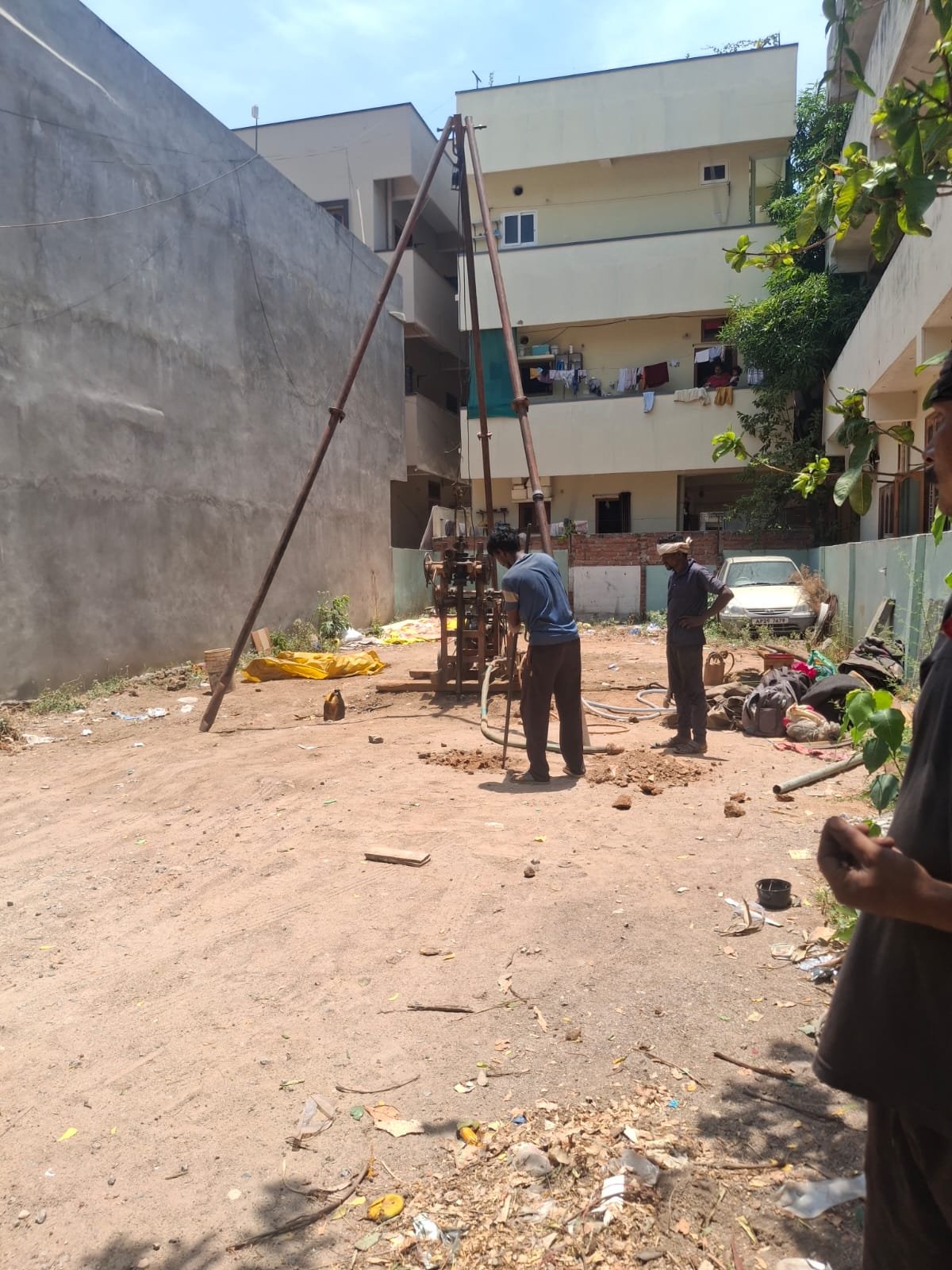
Ask any structural engineer what keeps them up at night, and it is rarely the columns or the beams. It is what they cannot see: the soil underneath. In fifteen years of drilling boreholes and signing off on foundation recommendations across Hyderabad and Telangana, I have watched the same story play out again and again. The building above ground is only ever as strong as the ground below it, and the ground almost never looks the way people assume it does.
Soil testing, or a proper geotechnical soil investigation, is how you replace that assumption with evidence before a single footing is cast. This post explains what soil testing for construction actually involves, and the concrete benefits it delivers, for homeowners building a single house just as much as for developers putting up an apartment block or a commercial structure.
What is soil testing for construction?
Soil testing is the process of investigating the subsurface conditions at your site, the layers of soil and rock, their strength, and the level of groundwater, so a geotechnical engineer can determine how the ground will behave once your building loads it.
It is not a single test. A complete soil investigation combines fieldwork at your plot with laboratory analysis of the samples recovered, and ends in an engineer’s signed report that tells your structural designer exactly what to build on and how deep to go.
What a proper soil investigation includes
A credible investigation follows the process laid out in Indian Standards such as IS 1892 (site investigation) and IS 6403 (bearing capacity). At Srinivas Foundations, every job covers:
- Field investigation, boreholes drilled at your site to the required depth, with in-situ tests such as the Standard Penetration Test (SPT) to measure how dense and strong each layer is.
- Groundwater assessment, locating the water table, which changes everything about how a foundation is designed and waterproofed.
- Laboratory testing, the recovered soil samples are tested for properties like density, moisture, shear strength, and consolidation behaviour.
- Geotechnical analysis, the engineer interprets the field and lab data to build a picture of the whole site.
- A signed geotechnical report, the scope of work, the soil profile, safe bearing capacity (SBC), the recommended type and depth of foundation, precautions, a location plan, and the supporting figures and tables.
That final report is the whole point. Everything else is the evidence behind it.
The real benefits of soil testing
Here is why this step is worth every rupee and the few days it takes.
- It tells you the right foundation to build, and how deep. Isolated footings, a raft, or piles? The answer is not a guess; it comes straight from the soil’s bearing capacity and the depth of firm strata. Get this right and you build with confidence.
- It prevents settlement, cracks and tilting. The vast majority of the cracked walls, sinking floors and leaning structures I am called to inspect trace back to one thing: nobody tested the soil, and the foundation was designed for ground that was never there.
- It saves you money, usually far more than it costs. A soil test is a small fraction of a project budget. Over-designing a foundation to be safe wastes lakhs in concrete and steel; under-designing it invites repair bills that dwarf the entire structure. Testing lets you build exactly what the site needs, no more, no less.
- It protects safety and life. A foundation failure is not a cosmetic problem. Testing removes the guesswork that puts occupants at risk.
- It keeps your project on schedule. Discovering weak soil or a high water table after excavation means redesigns, delays and disputes. Knowing it upfront means your design and your budget are right the first time.
- It supports approvals and due diligence. A signed geotechnical report is standard documentation that structural consultants, lenders and approving authorities expect to see for serious construction.
Put simply: soil testing turns the biggest unknown in your project into a known quantity before it can hurt you.
Why Hyderabad soil, in particular, demands a test
People often assume Hyderabad is all rock, so a soil test feels optional. In practice, the ground here is far less uniform than that reputation suggests. Within a few kilometres you can encounter hard granite and weathered rock, loose filled-up land over old tank beds (cheruvu), expansive clays that swell and shrink with the seasons, and pockets of soft, low-strength soil near water bodies.
Two neighbouring plots can behave completely differently. Expansive clay, in particular, is a quiet troublemaker, it looks fine when you dig, then lifts and cracks a lightly loaded structure once the monsoon arrives. The only reliable way to know what you are actually building on is to test that specific plot.
Signs you should not skip the soil test
You should always investigate before building, but treat it as non-negotiable if:
- You are constructing anything more than a single storey, or any commercial or multi-unit structure.
- The plot was recently a low-lying area, a tank bed, or filled and levelled land.
- You have seen cracks, dampness or settlement in nearby buildings.
- The site slopes, or groundwater is known to be shallow in the area.
- A lender, consultant or authority has asked for a geotechnical report.
What you actually receive: the geotechnical report
The deliverable that matters is the report. A complete one, signed by a geotechnical engineer, gives your structural designer everything they need:
- The scope of work and how the investigation was carried out
- A clear soil profile showing each layer and its depth
- The safe bearing capacity (SBC) for design
- The recommended foundation type and depth
- Precautions specific to your site
- A location plan, with figures and tables backing every conclusion
This is the difference between a one-line note that the SBC is fine and a document your engineer can genuinely design against, and stand behind.
How to choose a soil testing company
Not all reports are equal. Before you hire anyone, look for:
- A qualified geotechnical engineer signing the report, not an unsigned printout of raw lab numbers.
- Genuine fieldwork on your plot, real boreholes and in-situ testing, not values copied from a nearby site.
- Recommendations, not just data, the report should tell you what to do, not leave you to interpret tables.
- Proper accreditation and process, an ISO-certified firm following the relevant IS codes.
Srinivas Foundations is an ISO-certified geotechnical engineering firm doing exactly this work across Hyderabad and Telangana, field investigation, laboratory testing and a signed engineer’s report you can build on with confidence.
The bottom line
Soil testing is the cheapest insurance you will ever buy on a building. It is a few days and a small cost at the start of a project that protects everything you spend afterwards. Test the ground, get a proper report, and design your foundation on facts instead of hope.
Frequently asked questions
How long does soil testing take?
For a typical site, fieldwork takes a day or two, and the laboratory testing and signed report usually follow within a few days, depending on the number of boreholes and the depth required.
How many boreholes does my site need?
It depends on the plot size, the type of structure and the variability of the ground. Your geotechnical engineer decides this as part of the scope; a single house differs from an apartment block or a commercial building.
What is safe bearing capacity (SBC)?
SBC is the load the soil can safely carry per unit area without excessive settlement or failure. It is one of the key outputs of the report and directly drives your foundation design.
Is soil testing really necessary for a small house?
For a single-storey home on known good ground, requirements are lighter, but if the plot is filled land, near a tank bed, or shows any sign of weak or expansive soil, testing is strongly advised. It is far cheaper than repairing a cracked foundation later.
Can I use a soil report from the plot next door?
No. Soil conditions can change dramatically within metres. A report is valid only for the site it was tested on.
Planning a construction in Hyderabad or Telangana?
Get a clear, engineer-signed soil investigation before you build. Talk to us about your site.
WhatsApp us Call now