El Niño and Telangana’s Dry Year: What It Means for Your Soil, Foundation and Borewell
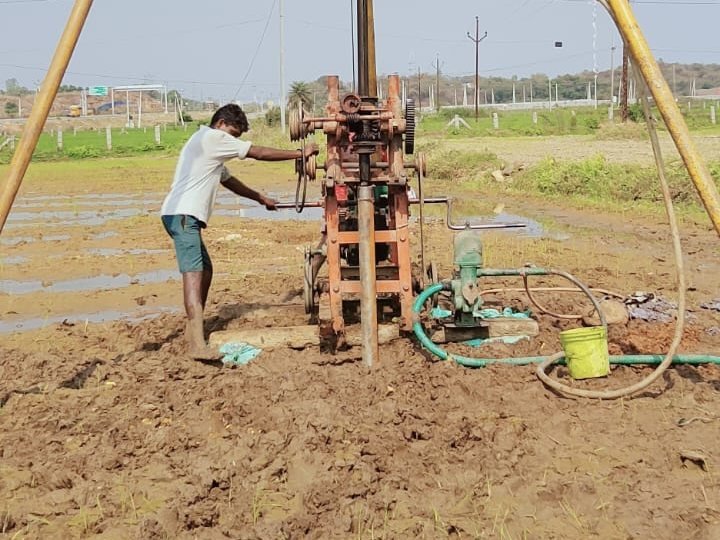
On 23 October, Chief Minister A. Revanth Reddy warned of a water and power crisis lasting eight to ten months, into July next year, and linked it to El Niño. He said the state’s reservoirs hold less than 200 tmc ft, that about 15 lakh of Telangana’s 30 lakh farm pump sets have already run dry, and that drinking water will come first. He asked everyone to use water and power carefully.
Most of the talk is about drinking water and crops, and it should be. But if you are building a house or planning one in the next year, a dry year also changes a few things under the ground. Here is what to watch for.
El Niño in one paragraph
El Niño is a warming of the Pacific Ocean that upsets weather patterns around the world. In India it usually means a weaker monsoon and hotter, drier months. This year India’s southwest monsoon ended about 13% below normal, and the India Meteorological Department expects El Niño to stay strong through the end of 2026.
Dry soil can fool you
Large parts of Telangana, including some outer areas of Hyderabad, have black cotton soil. This is an expansive clay. It shrinks and cracks when it dries out, and swells when it gets wet again.
A long dry spell followed by the first heavy rains is the worst case. The soil swells unevenly and pushes up on whatever sits on it. That is how you get lifted floors, cracked plinth beams and leaning compound walls. Light structures like single and two-storey houses suffer most, because there is not much weight holding them down.
In a dry year, a pit dug on your plot may look hard as rock. The same soil can behave very differently in August. That is why a proper soil test does not just look at the ground on the day. In the lab we check how much the soil swells when wet (the free swell index), and for roads and layouts we soak samples before testing them. The aim is to design for the soil at its worst, not its best.
A simple sign: if you see wide cracks on the surface of your plot during summer, there is probably expansive clay. Get it tested before you design the foundation.
The water level in your report is a snapshot
A soil investigation notes where groundwater was found in each borehole. In a drought year, that level can be much lower than usual.
This matters if you are planning a basement, a cellar parking level, a sump or an underground tank. Design them only for this year’s low water level, and a good monsoon later can bring water pressure and seepage you did not plan for. Ask your engineer two questions: where was the water found, and when? And what is the likely level after a normal monsoon?
Before you drill a borewell this year
With so many pump sets running dry, a lot of people will drill new borewells or go deeper. In most of Telangana the ground is hard rock, and water sits in cracks and weathered zones in that rock, not everywhere. Drill in the wrong spot and you pay for a dry bore.
An electrical resistivity (ERT) survey sends a small current through the ground and maps the layers below your plot. It shows which zones are more likely to hold water, so you can choose where to drill and roughly how deep. It improves your odds. It cannot promise water, and anyone who promises that before drilling is guessing.
Two more things. In Telangana a new borewell may need permission under the Water, Land and Trees Act (WALTA), so check with your local revenue or groundwater office first. And if a bore fails, cap it properly. An open borewell is a real danger to children.
Is this a bad time to get soil tested?
No, it is a good time. Dry sites are easier to reach with a drilling rig, and fieldwork goes faster. If you test now, your report will be ready when you want to start building. Just make sure the engineer reading the results knows it was a dry year, and that the lab tests cover how your soil behaves when wet.
A short checklist if you are building in 2026 or 2027
- Get the plot tested, even for a small house, and especially if you see cracks on the surface.
- If clay is found, make sure swell tests are part of the lab work.
- Ask where the water table was found, when, and what to expect after a normal monsoon.
- Plan your construction water early. Concrete curing needs a lot of it, and tankers get scarce and costly in a drought.
- Before drilling a borewell, consider an ERT survey and check whether you need permission.
- Use water carefully on site. Every litre matters this year.
Frequently asked questions
Does El Niño affect the soil under my house?
Not directly, but the long dry spell it brings does. Expansive clay shrinks and cracks when it dries out and swells again when the rains return. That movement is what damages floors and walls, so the soil needs to be tested for how it behaves when wet, not just how it looks in a dry month.
Should I postpone construction because of the drought?
Not necessarily. Dry months are a good time for site investigation and early work. Plan your construction water carefully, because concrete curing needs a lot of it and tanker supply gets tight in a drought, and make sure your foundation design is based on a proper soil test.
Can an ERT survey guarantee water in my borewell?
No. An electrical resistivity survey shows which zones under your plot are more likely to hold water, which helps you choose where and how deep to drill. It improves the odds. Nobody can promise water before drilling.
Building or drilling in Hyderabad this year?
We do soil investigation, lab testing in our own soil lab and ERT surveys across Hyderabad and Telangana. Tell us about your plot and we will tell you which tests it needs.
WhatsApp us Call 081060 29016Also read: Soil Testing Labs in Hyderabad: What Happens to Your Sample and What You Get Back